
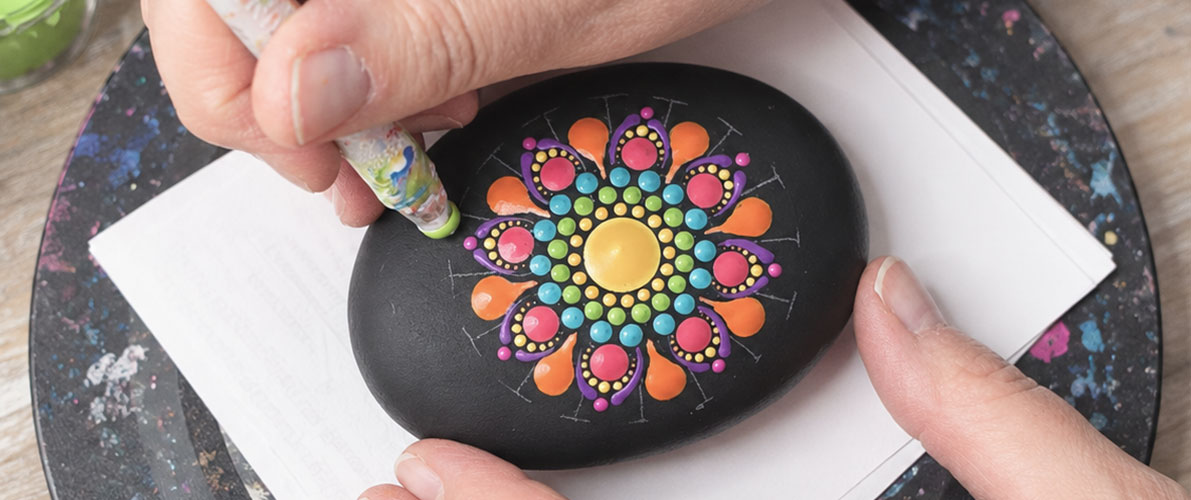
A mandala is a symbolic circular design that represents unity, balance, and focus. The word mandala comes from Sanskrit meaning “circle,” and these designs have appeared for thousands of years in spiritual, artistic, and psychological traditions.
In Hindu and Buddhist contexts, mandalas were originally used as sacred diagrams for meditation and ritual, representing the cosmos and the individual’s place within it.
In later Western thought, psychologists such as Carl Jung observed mandalas as symbols of wholeness and inner balance, using them in studies of personality and self-integration.
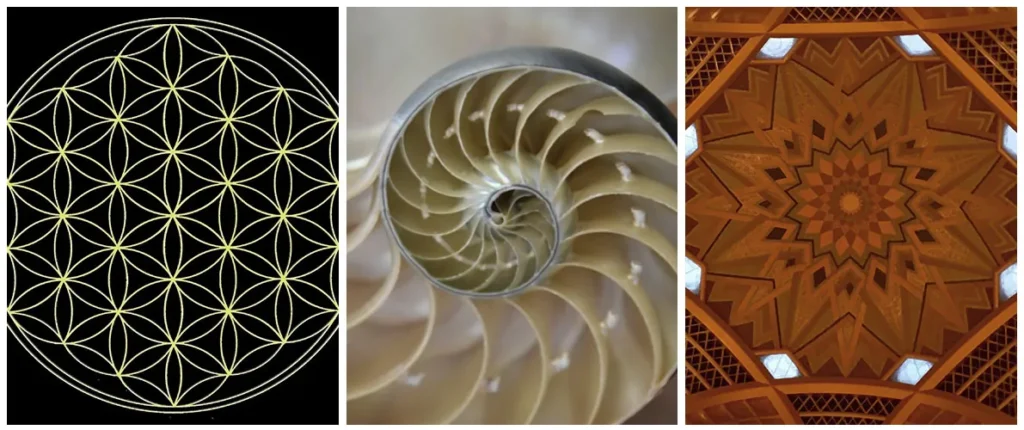
The Language of Sacred Geometry
Mandalas are forms of sacred geometry, built around a central point and expanding outward in balance.
Sacred geometry refers to the repeating patterns and proportions found throughout nature, from the spiral of a shell to the symmetry of a flower. These patterns reflect rhythm, proportion, and repetition.
These forms are not random. The human nervous system is naturally drawn to symmetry and rhythm. Balanced designs help steady attention. Repetition creates predictability. The mind settles.
In mandala art, the center point represents focus. As the design expands outward in repeating rings, it mirrors cycles of growth and return, movement and stillness. This circular structure often feels calming because it reflects order and continuity.
Certain pattern choices subtly shift the tone of a piece:
- Tight, intricate dot work can create a sense of concentration and intensity.
- Wider spacing and open symmetry often feel expansive and spacious.
- Repeating petals or radiating lines suggest outward movement and activation.
- Circular layering reinforces stability and grounding.
The structure of a mandala becomes a quiet guide for attention.
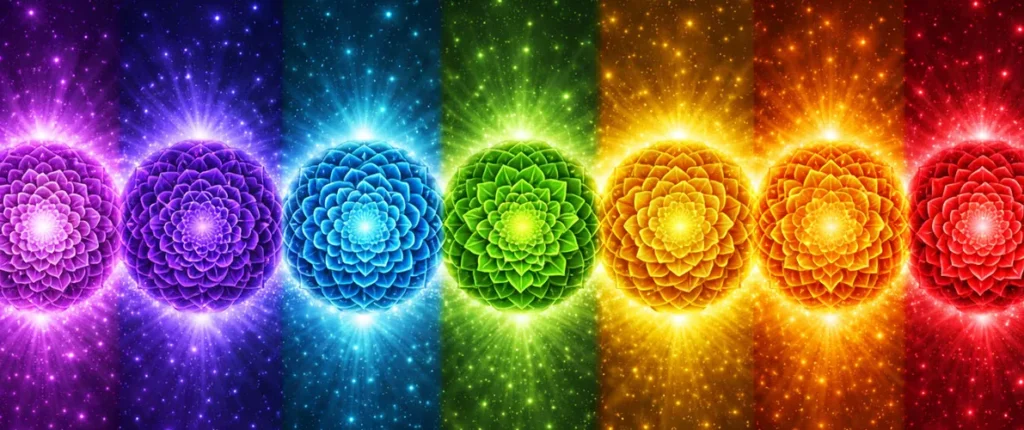
Color: The Emotional and Energetic Influence
While pattern creates structure, color shapes emotion.
Color theory explores how hues influence perception and mood. In many metaphysical traditions, colors are also associated with energetic centers in the body, commonly referred to as chakras.
For example:
- Red is often linked with grounding, stability, and vitality.
- Orange carries creative and emotional movement.
- Yellow relates to confidence, personal power, and clarity.
- Green is commonly associated with balance, renewal, compassion, and heart-centered energy.
- Blue connects with calm, expression, and communication.
- Indigo is tied to insight and perception.
- Violet or purple relates to intuition and reflection.
- White suggests openness and clarity.
These associations are not rigid rules. They are patterns observed across traditions. What resonates with one person may feel different to another.
When selecting colors for a mandala stone, I sometimes follow traditional symbolism. Other times, the color palette emerges intuitively during the painting process. What matters most is one’s own natural interpretation.
When Pattern and Color Work Together
The most powerful designs arise when structure and color align.
A tightly structured mandala paired with grounding earth tones can feel steady and rooted. A more open, radiating design in lighter hues may feel uplifting and expansive. Cooler color palettes can encourage reflection and calm.
Pattern provides the framework. Color provides the emotional tone.
Together, they create the overall energetic character of the piece.
Choosing What Resonates
You do not need to understand sacred geometry or chakra theory to choose a meaningful piece.
Often, people are drawn to a color or design instinctively. That pull is enough.
Resonance matters more than interpretation. If a pattern feels calming, expansive, strong, or comforting, trust that response.
Mandala work is not about strict symbolism. It is about alignment between structure, color, intention, and the person receiving the piece. If you feel called to explore how these elements come together in contemporary designs, feel free to view my collection of hand-painted mandala stones.